



Music
An overview of the music from the 1920s.
Jump To:
The Radio Revolution: When America First Tuned In
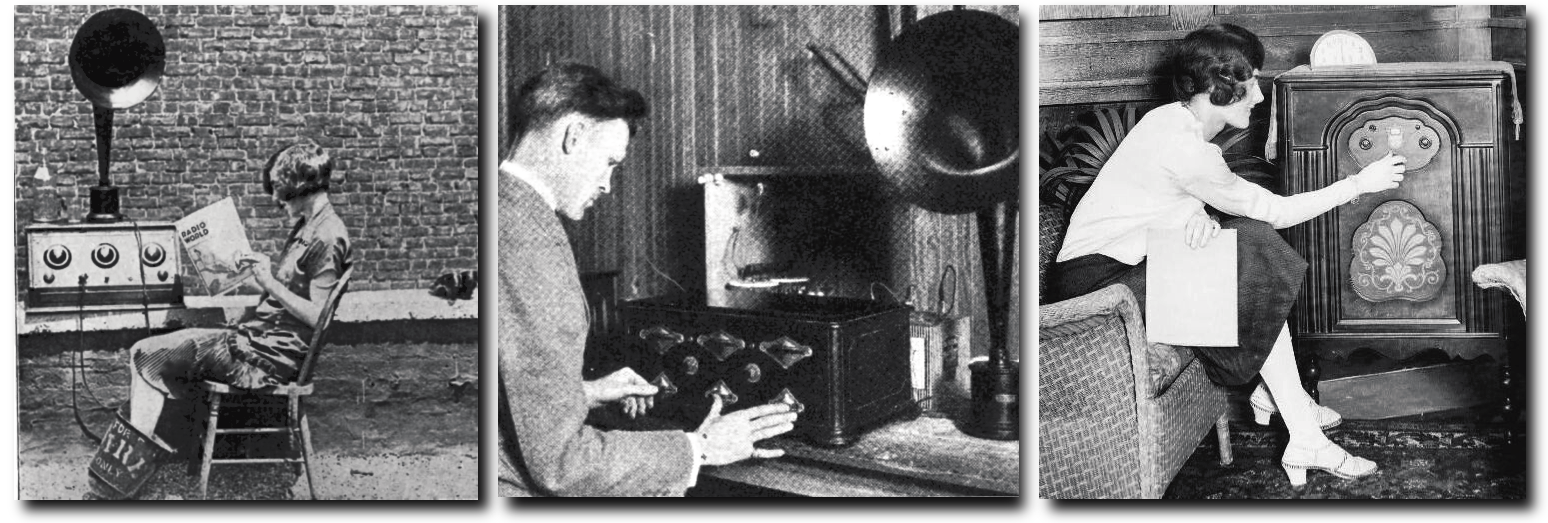
In the 1920s, radio burst onto the American scene like the internet of its day: suddenly everyone had to have one. Families gathered around hulking wooden boxes, mesmerized by voices and music floating through the air like magic. Jazz, news, and comedy shows transformed living rooms into entertainment hubs.
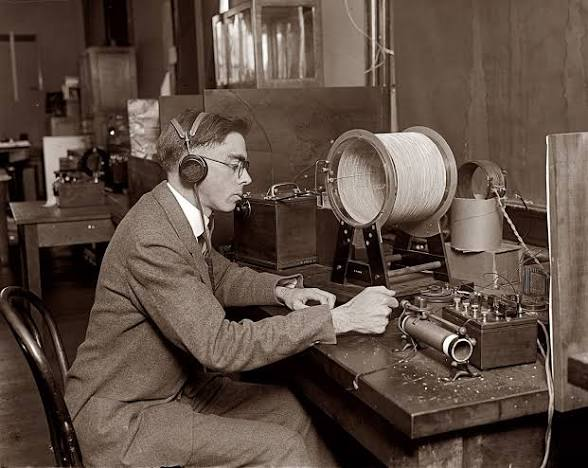

Radio enthusiasts were the original tech nerds, spending weekends hunched over crystal sets and swapping vacuum tubes. As a new and difficult technology, it relied on hobbyists to bring it into the home. Husbands would spend hours tinkering with antennas stretching across entire backyards, desperately trying to pull in a signal from some distant station. A decent factory-built radio cost around $75, roughly $1,000 in today's money, so many built their own from department store kits. In 1920, KDKA in Pittsburgh began regular commercial broadcasting, often considered the start of U.S. commercial radio. By 1924, hundreds of stations had appeared and radio sets became mass-market technology, with advertising and entertainment networks beginning to solidify. It remained prominent through the rest of the decade, the later part of the 1920s often being considered the start of the "Golden Age of Radio".
The Live Nature Of Performance
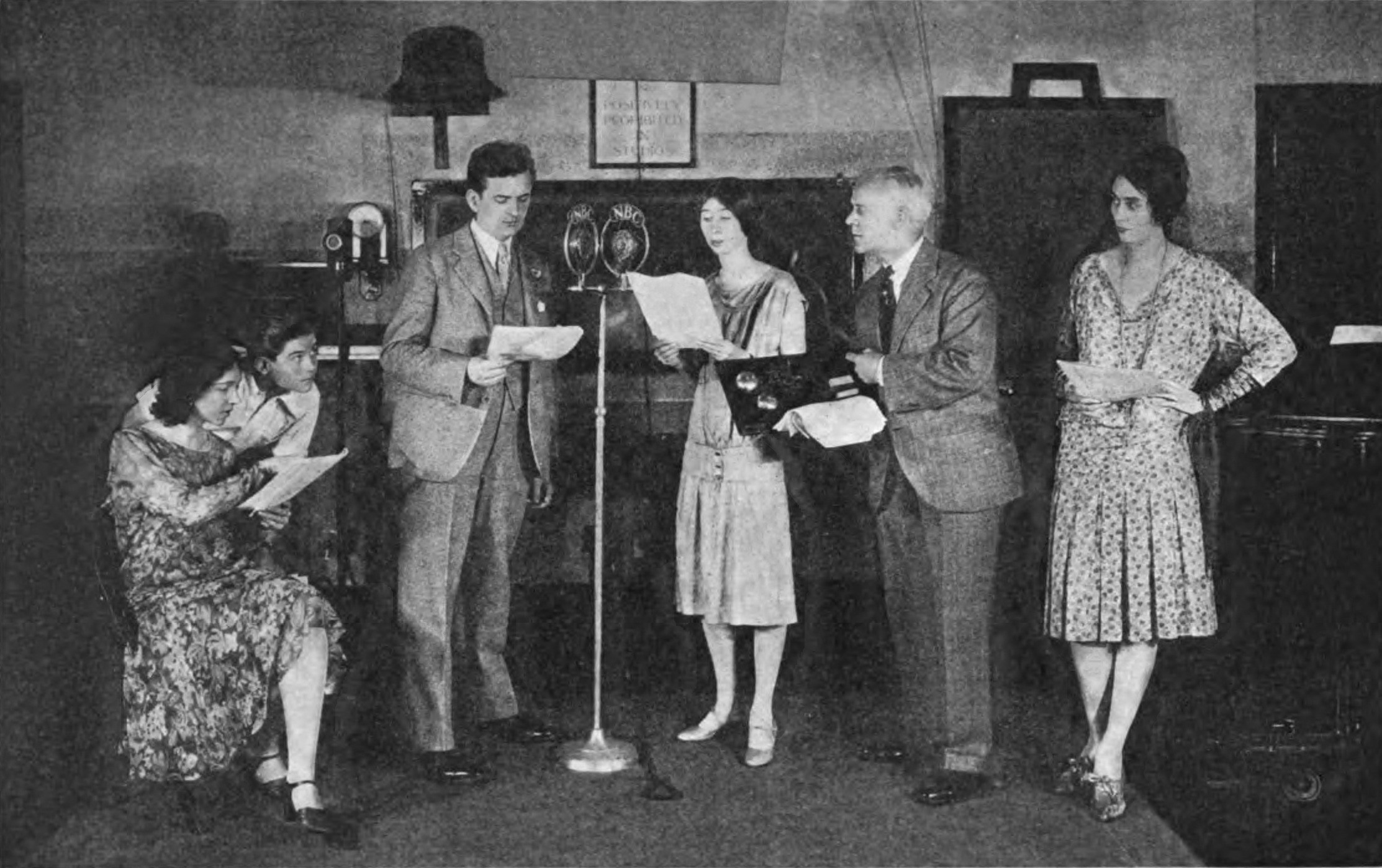
What made the early days of radio truly magical was that every broadcast was live. Singers and musicians crowded into tiny studio spaces, performing directly into primitive microphones with full orchestras behind them. There were no recordings to fall back on. This gave immense prestige to radio performers, as each song was a unique event that would never be heard exactly the same way again. It wasn't until decades later that playing recordings on air became feasible.
It was a hobby, an obsession, and a revolution rolled into a glowing tube.

All That Jazz
The emergence of jazz in the 1920s was one of the most transformative developments in modern music. Rooted in Black musical traditions, the new genre combined blues, ragtime, spirituals, brass band music, and improvisation into a vibrant new style that came to define the "Jazz Age."
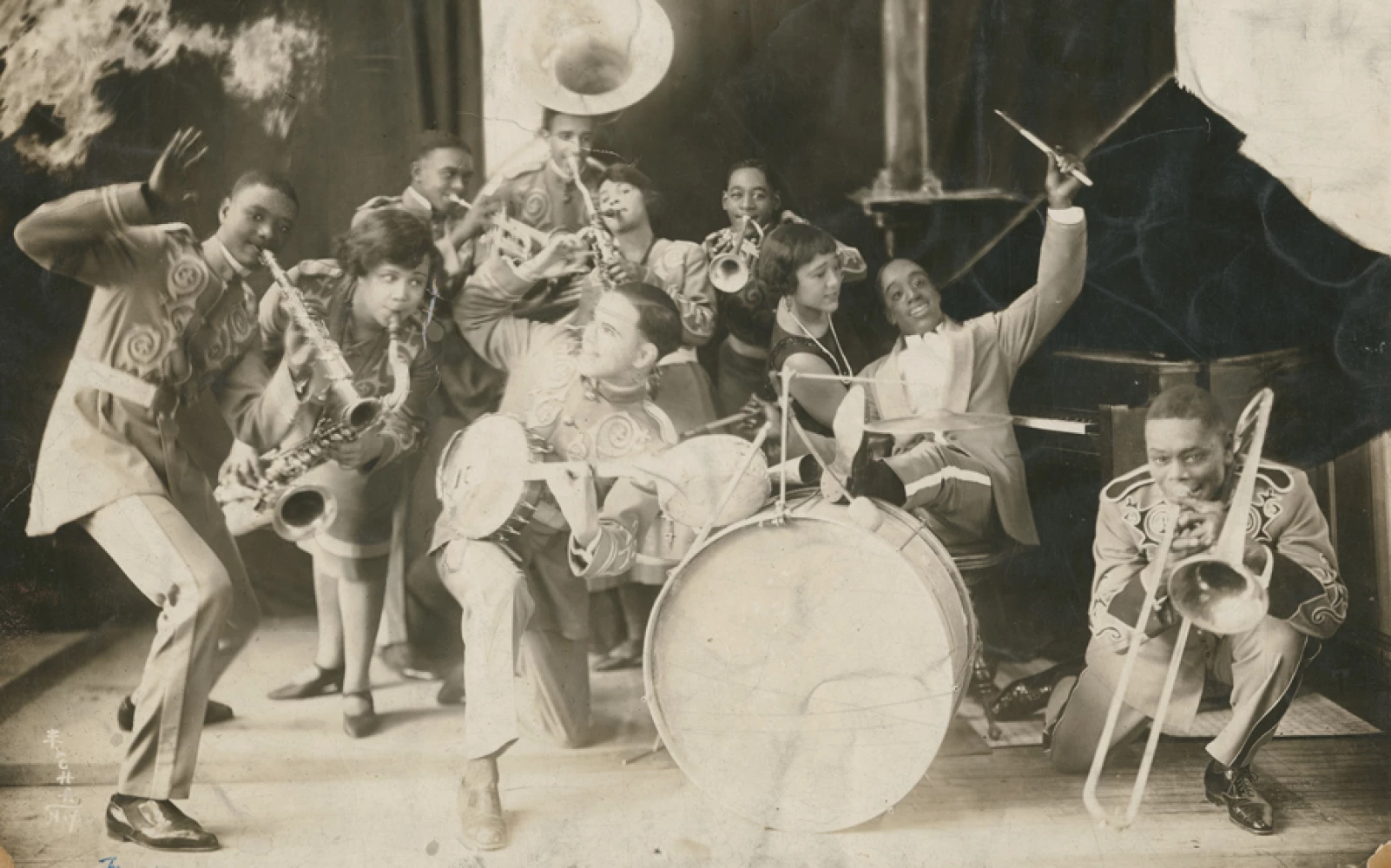
Where jazz came from: Jazz originated in New Orleans around the turn of the 20th century. The city's unique mix of African, Caribbean, French, Spanish, and American cultures created an environment where musical traditions blended freely. Black musicians drew on the emotional expressiveness of the blues, the syncopated rhythms of ragtime, church gospel, and the marching brass bands common in New Orleans.
As musicians moved north during the Great Migration, jazz spread to cities like Chicago and New York City. These urban centers became the new hubs of jazz, where the music evolved rapidly and reached national audiences.
Unlike the more structured music that preceded it, jazz emphasized:
- Improvisation & spontaneous melodies
- Syncopation
- Call-and-response
- Collective performance
Early New Orleans ensembles often featured trumpet, clarinet, trombone, piano, banjo, bass or tuba, and drums. As jazz matured in Chicago and New York, solos became longer and arrangements more sophisticated.
The Big names of the Jazz Age: Several musicians became synonymous with the rise of jazz. Louis Armstrong revolutionized jazz with his virtuosic trumpet playing and innovative solo improvisation, while Duke Ellington transformed jazz composition and orchestration, leading one of history's greatest jazz orchestras while elevating the music to new artistic heights. Other names include Jelly Roll Morton, Bessie Smith, King Oliver, and Fletcher Henderson.
Dances
The 1920s were a period of rapid social change, urbanization, and cultural innovation, and dance reflected that energy. Many of the era's most famous dances emerged from Black communities, especially those in New York City and Chicago, before spreading to mainstream audiences through jazz clubs, ballrooms, theater, and film.
Here's a brief overview of some of the most influential dances:
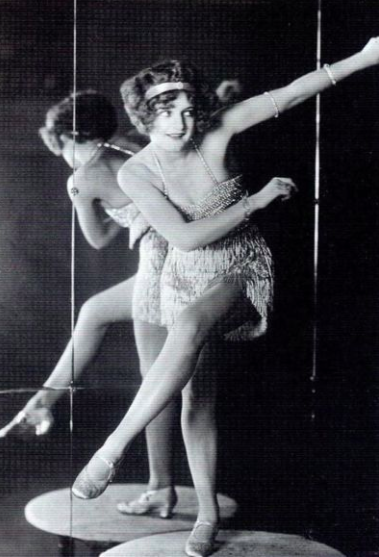
- Foxtrot (continued popularity): First introduced before the 1920s, the Foxtrot evolved during the jazz era into a smoother, more relaxed ballroom dance that fit the new syncopated rhythms of jazz orchestras.
- Shimmy (1910s–1920s): The Shimmy emphasized rapid shoulder shaking and loose upper-body movement. It became fashionable in nightclubs and vaudeville performances and was sometimes criticized by conservative groups for being too provocative.
- Charleston (1923): Inspired by Black dance traditions from Charleston, the Charleston exploded in popularity after its inclusion in the Broadway musical Runnin' Wild. Its fast footwork and swinging arms made it a symbol of the "Roaring Twenties."
- Black Bottom Stomp (1926): Originating in Black communities, likely in the American South, the Black Bottom featured energetic stomping, heel kicks, and rhythmic hip movements. It became a nationwide craze around 1926 after appearing in Broadway productions and was one of the defining dances of the Jazz Age.
- Lindy Hop (1928): Developed in the ballrooms of Savoy Ballroom in New York City, the Lindy Hop blended the Charleston, breakaway, and partner dancing into a dynamic swing dance. It was named in commemoration of Charles Lindbergh's famous solo nonstop flight across the Atlantic. In May 1927, Lindbergh became an international celebrity after flying alone from New York City to Paris. Newspapers nicknamed him "Lucky Lindy," and headlines used phrases like "Lindy Hops the Atlantic" or similar variations, using "hop" as slang for a quick trip. Around 1928, dancers in Harlem were developing a new partner dance by blending breakaway, Charleston, jazz dance, and other African American social dance traditions. During a dance marathon, dancer George 'Shorty' Snowden was reportedly asked by a reporter what the dance was called. According to the famous story, Snowden looked around, saw a newspaper headline about Lindbergh's flight, and jokingly answered, "The Lindy Hop." The name stuck. It is often associated with dancers such as George Snowden and later Frankie Manning. Although it originated in the late 1920s, it reached its greatest popularity in the 1930s and 1940s.