




An overview of fashion from the 1920s.
Jump To:

The Beginning
By 1919, America was unrecognizable. Overseas the Great War had shattered empires, but in the United States it had demolished faith in European, Victorian ideals that had governed society for generations. Men who had witnessed industrial-scale death returned home with a simple philosophy: live for today, because tomorrow is promised to no one.
The generation gap was enormous. Older generations who preached restraint and propriety were shocked as their daughters cut their hair, shortened their skirts, and danced until dawn in illegal speakeasies. The war had given them a taste of independence. After all, they had built airplanes, driven ambulances, and managed offices in men's absence, so why should they retreat into domestic roles? Women gained the vote in 1920, entered universities, and worked in offices, while the widespread emergence of the automobile gave the youth freedom of movement and privacy away from prying eyes.
Mass production and the post-war economic boom was making stylish clothing affordable to the middle class, and the development of mass media allowed trends to spread from coast to coast in the form of mail-order catalogues, radio, and motion pictures. Jazz music, born in Black communities and spreading through Harlem's clubs, brought new rhythms and new attitudes about pleasure and rule-breaking. All these forces converged to create a perfect storm, where fashion became the expression of a new independent youth.
Women's Fashion
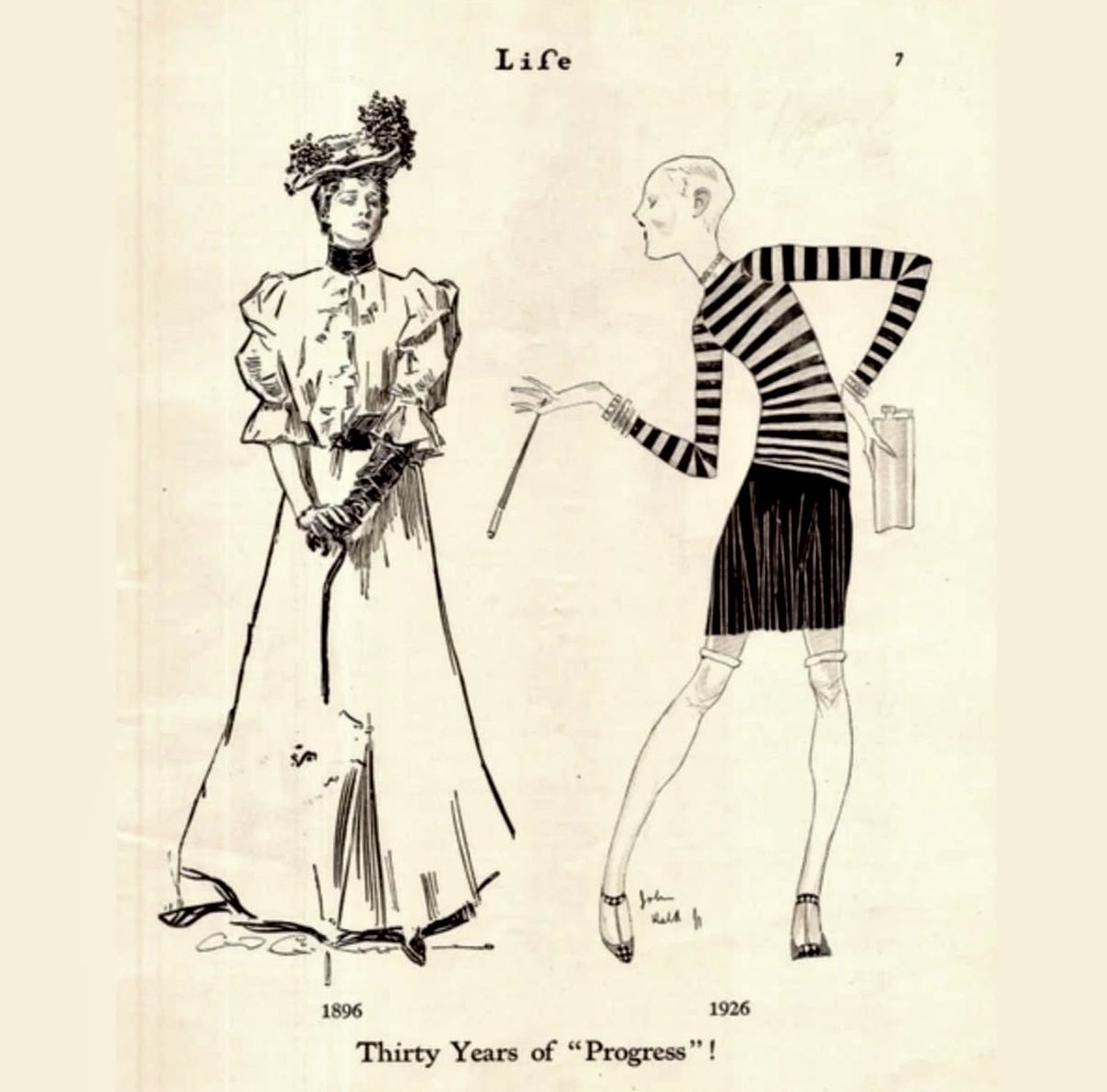
The Silhouette Shift: The most dramatic change was the complete rejection of the Edwardian "S-bend" corset and hourglass figure. The 1920s celebrated a straight, boyish silhouette: flat chest, dropped waist (often at the hips), and a loose, tubular shape. This was revolutionary after centuries of cinched waists and emphasized curves.

Key Distinctions from the Pre-War Era:
- Hemlines: Rose from ankle-length to knee-length by mid-decade (shocking at the time!)
- Hair: The bob haircut replaced long, pinned-up Victorian hair
- Undergarments: Confining corsets gave way to light brassieres and step-in chemises
- Fabric & Movement: Heavy, structured fabrics replaced by lighter silks, rayons, and chiffons that allowed dancing
- Ornamentation: Geometric Art Deco beading, fringe, and sequins replaced the romantic lace and ruffles of the Edwardian era
- Makeup: Women openly wore cosmetics (previously associated with "loose women"). Dark lipstick, kohl-rimmed eyes, and rouge became fashionable
Men's Fashion
While less dramatic than women's changes, men's fashion also modernized significantly.
Key Distinctions from the Pre-War Era:
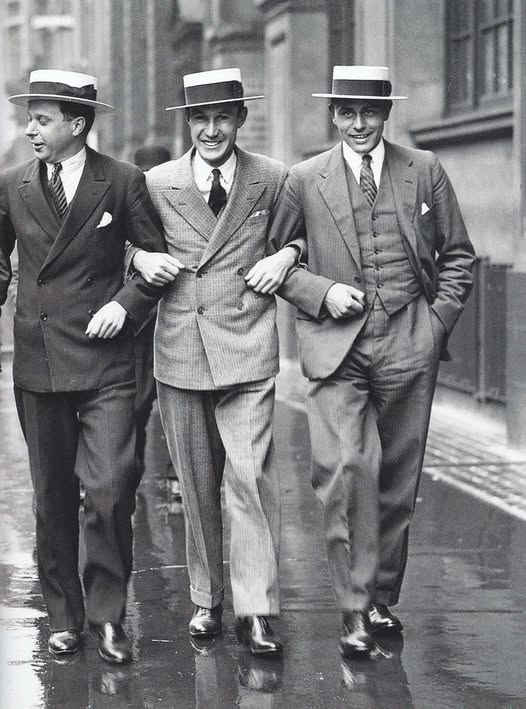
- Emergence of Casualwear: Sweaters, sports jackets, and knickerbockers for golf became acceptable day wear
- The "Collegiate Look": Younger men adopted raccoon coats, bow ties, and straw boater hats
- Colors & Patterns: Moving away from somber Victorian blacks and grays to lighter fabrics, pinstripes, and checkered patterns
- Accessories: Two-tone spectator shoes, pocket squares, and fedoras replaced top hats
Men's Hair
One of the most distinctive parts of 1920s Men's Fashion was the Slick Back. In contrast with the previous era when Edwardian gentlemen had favored a gentle part and waxed mustaches, post-war men rejected this in exchange for something sleeker and more modern: hair plastered flat against the skull with a razor-sharp side part, often combed straight back from the forehead.
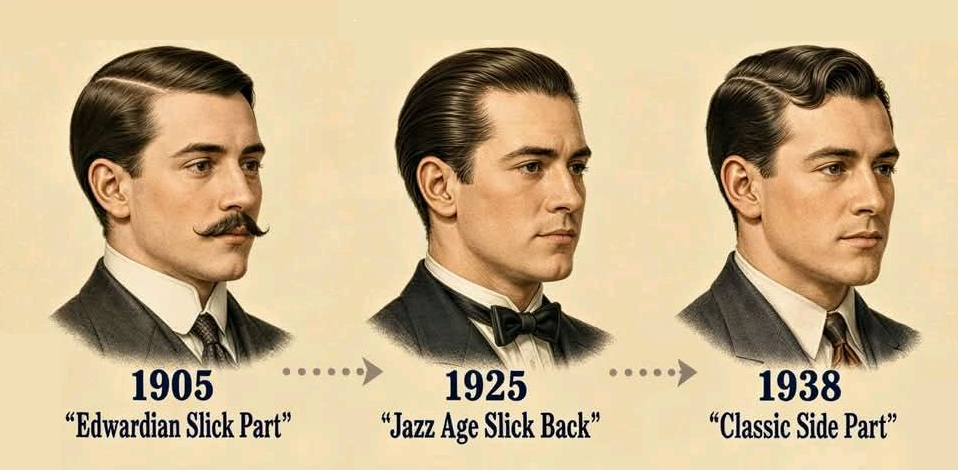
Pomades, gels, and carrying combs were a constant part of life. Photographs show men pausing to check their reflections in shop windows, adjusting their hair before entering a restaurant. Walk into any barbershop in 1925 and you'd be hit by the unmistakable scent of pomade, that waxy, petroleum-based brilliantine that transformed millions of American men into glossy-headed replicas of Rudolph Valentino. The morning routine involved working Murray's Superior Pomade or Brylcreem through damp hair, combing it into submission, and maintaining that glossy armor throughout the day.
Silent Movies: Rudolph Valentino's gleaming hair in his 1921 appearance in The Sheik only fueled this style. Douglas Fairbanks, John Gilbert, and Clark Gable all sported the look, and grooming companies promised average men they could achieve the same screen-idol shine.
Decline: The slicked style began fading in the early 1930s. Depression-era men gradually allowed more natural texture back into their hair, though pomade remained popular. By mid-decade, softer styles with more volume were emerging, ending the reign of the patent-leather look.
Evolution through the Decade
Early 1920s (1920-1923)
Men's fashion at the decade's start remained formal and conservative. The standard suit consisted of a three-piece ensemble with high-waisted trousers featuring narrow legs and cuffed bottoms. Jackets were long, often extending past the hip, with narrow shoulders and a button stance positioned high on the torso. Vests were essential components of respectable dress, rarely omitted even in warm weather.
Trousers sat significantly above the natural waistline and were held up by suspenders rather than belts. The rise measured approximately 12-13 inches, creating a distinctive silhouette. Fabrics tended toward heavy wools in dark colors: charcoal, navy, brown, and black dominated. Pinstripes and subtle patterns provided the primary variation.
Shirts featured detachable collars in stiff, starched cotton. These collars stood tall and required collar pins or bars to maintain their shape. Neckties were relatively narrow and tied in four-in-hand knots. Shoes were predominantly oxford-style lace-ups in black or brown leather with rounded toes.
Women's fashion was still steeped in Edwardian influences. Hemlines hovered around mid-calf, representing a dramatic rise from pre-war ankle lengths but still modest by later standards. Waistlines dropped to the hip, creating a tubular silhouette that minimized the bust and hips. Dresses remained relatively fitted through the torso despite the lowered waist.
Fabrics included heavy silks, velvets, and wool crepes in dark, rich colors. Beading and embroidery adorned evening wear, concentrated at hems and necklines. Day dresses featured simpler ornamentation, often with decorative panels or modest draping.
Undergarments still included corsets, though these evolved into lighter "girdles" designed to flatten rather than cinch. Bandeau-style brassieres compressed the bust to achieve the desired straight profile. Stockings in silk or rayon were essential, typically in black or brown, held up by garters attached to corsets or girdle belts.
Sleeves varied from short cap styles to three-quarter length. Necklines remained relatively high for daywear, with square, round, or boat shapes predominating. Hats were essential accessories, featuring wide brims or close-fitting cloches that sat low on the forehead.
Mid 1920s (1924-1926)
Men's silhouettes began its gradual transformation during these years. Jacket lengths shortened slightly, and shoulders broadened incrementally. The button stance moved lower on the torso, creating a longer lapel line. Double-breasted jackets gained popularity alongside traditional single-breasted styles.
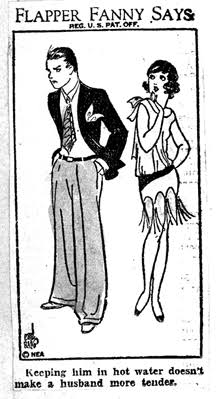
Trousers started their descent from the high waist, though they remained well above the natural waistline by modern standards. Leg width increased gradually, moving away from the narrow cut of earlier years. Oxford bags, extremely wide-legged trousers measuring up to 25 inches at the cuff, emerged as a youth fashion statement, though they remained controversial.
Fabric patterns became bolder. Checks, plaids, and more prominent stripes appeared with greater frequency. Lighter colors, including tans and grays, supplemented the traditional dark palette. Knickers remained popular for golf and country wear, paired with argyle socks and two-tone spectator shoes.
Soft-collared shirts began replacing starched detachable collars, representing a significant shift toward comfort. Collar points shortened and softened.
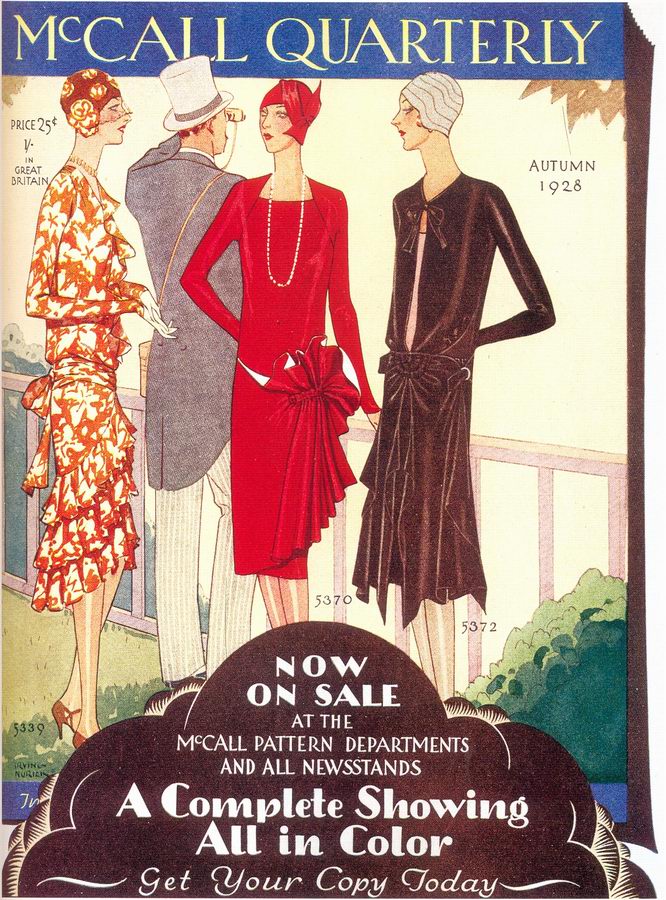
For women, this period marked the apex of the "flapper" aesthetic . Hemlines rose dramatically, reaching the knee by 1926-1927. The silhouette became completely straight and shapeless, with dresses hanging loosely from the shoulders with no waist definition. Many styles featured dropped waists positioned at hip level or below, often marked by a sash, belt, or decorative band.
Fabrics grew lighter and more fluid. Chiffon, georgette, and thin silk crepes allowed for movement and draping. Colors brightened considerably, with pastels, vivid jewel tones, and metallic fabrics gaining popularity. Beading became elaborate, covering entire bodices and skirts in geometric Art Deco patterns.
Sleeveless dresses became acceptable and common, a revolutionary development. When present, sleeves were minimal: short caps or flutter styles. Necklines plunged lower, with V-necks and scoop necks replacing higher cuts. Backs often featured even more dramatic cuts than fronts.
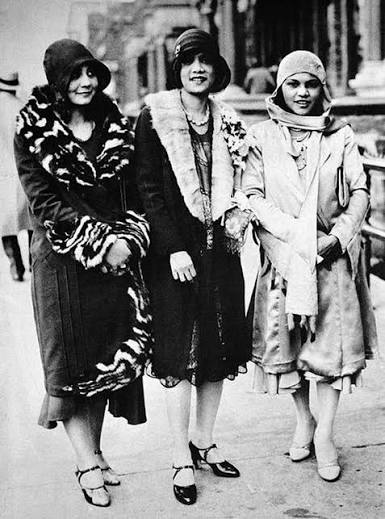
The cloche hat dominated, fitting tightly to bobbed hairstyles. These bell-shaped hats required women to cut their hair short or pin it flat. Stockings continued in neutral flesh tones or remained dark. Shoes featured lower heels than previous decades, often with decorative straps: Mary Janes and T-straps were ubiquitous.
Undergarments simplified dramatically. Step-in combinations replaced multiple layers, creating smooth lines under thin fabrics. Corsets virtually disappeared from young women's wardrobes.
Late 1920s (1927-1930)
By the decade's end, men's fashion had adopted a distinctly modern appearance. Suits featured broader shoulders achieved through padding and structured tailoring. Jackets shortened further and developed a more rectangular silhouette with wider lapels. The drape cut, which allowed fabric to hang more loosely from the shoulders, emerged as an innovation.
Trousers reached their widest point, with many styles featuring full, pleated fronts and legs measuring 22-24 inches at the cuff. The waistline continued lowering, approaching the natural waist. Belts became increasingly common alternatives to suspenders.
Fabrics diversified considerably. Tweeds, flannels, and lighter-weight tropical wools expanded options beyond heavy broadcloth. Bold patterns, including windowpane checks and herringbones, achieved mainstream acceptance. Summer suits in cream, light gray, and tan became standard seasonal wear.
Soft collars dominated, with button-down and widespread collar styles becoming standard. Ties widened slightly and featured bolder patterns and colors. Two-tone correspondent shoes in black and white or brown and white became fashionable footwear.
The tuxedo also evolved, with shawl collars and midnight blue fabric challenging traditional peaked lapels and black.
Women's fashion began shifting as the decade closed. Hemlines started their descent in 1928-1929, first becoming uneven with handkerchief hems or asymmetrical cuts, then dropping uniformly. By 1930, hemlines reached mid-calf again, returning to early 1920s lengths. This change happened remarkably quickly.
The silhouette evolved from straight and shapeless to longer and more fitted. Waistlines began returning to their natural position, though this transition occurred gradually. Dresses featured more vertical lines, creating elongated proportions through panels, seaming, and fabric draping. The bias cut emerged, allowing fabric to cling and flow over the body's curves without obvious waist definition.
Fabrics maintained their lightness but emphasized fluidity and drape. Satin, silk crepe, and bias-cut materials created movement. Colors became more sophisticated and subdued compared to mid-decade brightness. Evening wear featured metallics, especially gold and silver lames.
Sleeves lengthened and gained volume. Puffed sleeves, dolman sleeves, and flutter sleeves in longer lengths appeared frequently. Necklines varied more widely, with cowl necks becoming particularly fashionable. Fur trim, especially fox and mink, adorned collars and cuffs.
The cloche remained popular but competition emerged from wider-brimmed styles that accommodated longer hairstyles as women began growing their bobs out. Heels grew taller and thinner. Stockings in neutral, flesh-toned shades became standard, paired with shoes featuring closed toes and decorative details.
Costume jewelry, especially long pearl strands and Art Deco brooches, remained essential accessories throughout the transition.