


The Cars of Agency Grimm
Here is a brief overview of the cars featured throughout the series.
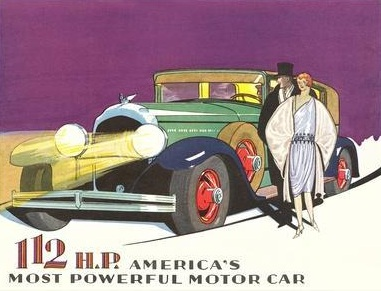
Historical Note - Most cars of the 1920s are recognizable by their boxy silhouettes, exposed frames, freestanding fenders, large spoked wheels, and folding soft tops that gave most cars a carriage-like appearance. Unlike the streamlined cars of the 1930s, these cars still looked visibly mechanical, with separate headlights and horns bolted on. They were also surprisingly customizable. The same Ford model could serve as a coupe or a sedan with either a rear trunk or extra passenger seating and choices for a convertible soft top or hard top. To Americans, these cars represented modernity in its sharpest sense: speed, excitement, and the freedom to go anywhere, all brought to you by the power of a machine. But parts wore quickly on rough roads, and tuning, lubrication, and repair were regular parts of ownership.

Ford Model T
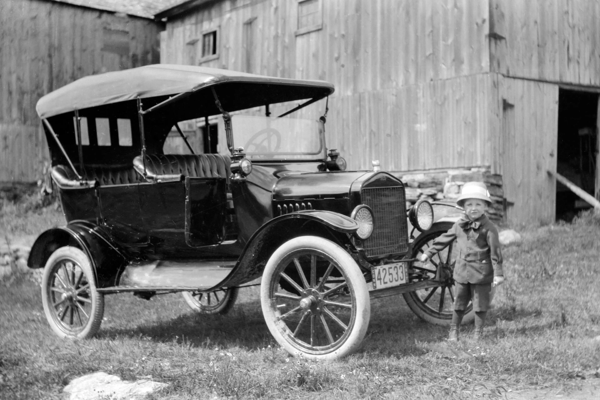
Engine: Inline-4
Horsepower: 20
Price: $290 - $580
Vibe: Ubiquitous, primitive
Overview: A noisy, basic machine controlled by three foot pedals and a hand lever. The venerable "Tin Lizzie" was at the end of its historic production, but it still made up roughly half the cars on American roads, blending seamlessly into any working-class neighborhood, alleyway, or crowded city street.
Performance: Its tiny 177 cubic inch engine produces 20 horsepower. It tops out at a rattling 40–45 mph, meaning it will be left in the dust instantly in a real pursuit.

Chevrolet Superior (Series V)
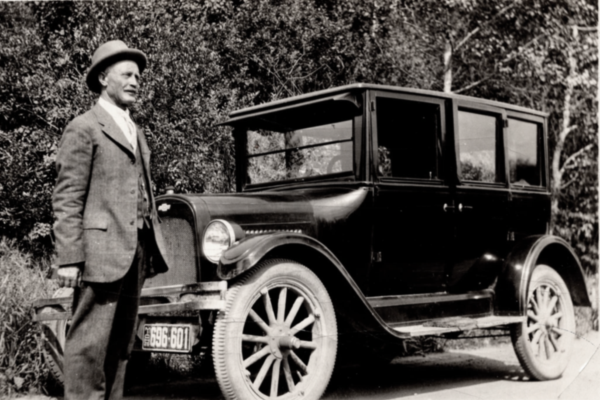
Engine: Inline-4
Horsepower: 26
Price: $510 - $765
Vibe: Practical, mass-market, half a step above a Ford
Overview: The Chevrolet Superior was General Motors’ direct attack on the Model T. For just a few dollars more, buyers got a "real" car with a standard 3-speed manual transmission, a proper foot throttle, and a much cleaner design. This is the chosen ride for delivery drivers, store owners, and low-level street operators wanting dependable transportation without attracting attention.
Performance: Its 4-cylinder engine produces 26 horsepower. While slightly faster and much easier to drive than a Model T, it is still strictly a city commuter, hitting a top speed of 50 mph.
Dodge Brothers Touring Car (Series 126)
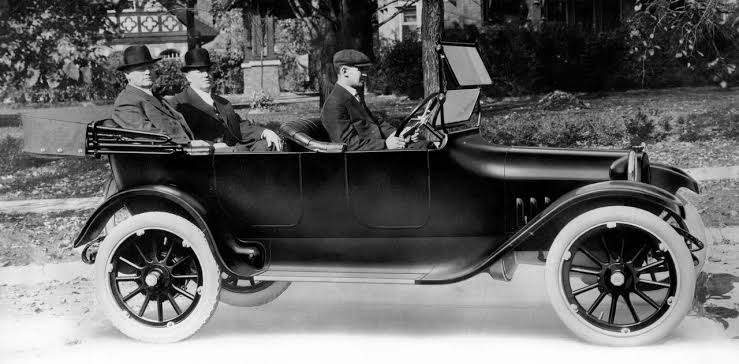
Engine: Inline-4
Horsepower: 35
Price: $795 - $995
Vibe: Tough, unpretentious
Overview: Dodge Brothers vehicles earned a legendary reputation for durability during the Great War, and the 1920s models carried that same rugged reputation. Unlike previous cars, with their ash and oak frames, this one had an all-steel body. It was highly favored by small-time bootleggers, rural lawmen, and working detectives because it can handle muddy backroads without cracking an axle. It wasn't a luxury machine, but it was notoriously difficult to break.
Performance: The heavy-duty 4-cylinder pushes out 35 horsepower. It won’t win drag races, but it has excellent low-end torque for pulling heavy loads.
The Lincoln Model L (The "Police Flyer")
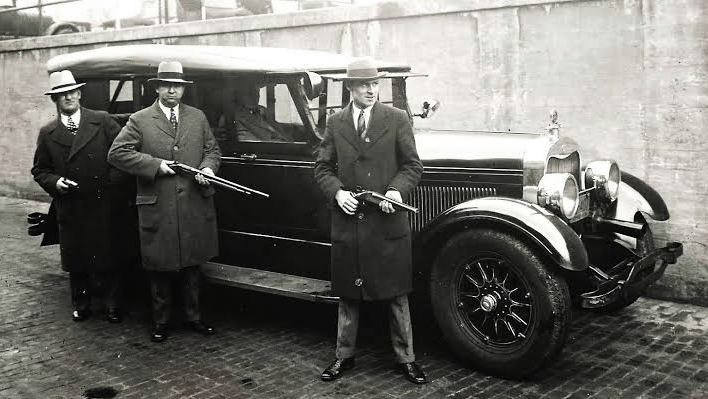
Engine: V8
Horsepower: 90
Price: $4,000 - $5,400
Vibe: Brute force, absolute authority, speed
Overview: After Henry Ford purchased Lincoln, he obsessed over making the Model L the finest-engineered powerhouse in America. Its precision-machined V8 engine was so fast and reliable that it became a legend among both sides of the law. Police departments bought fleets of them as "Police Flyers," while top-tier bootleggers used them to run rings around ordinary state troopers. It was the ultimate interceptor.
Performance: The massive 358 cubic inch V8 generates a thundering 90 horsepower. It can easily push past 80 mph, providing a level of sustained, aggressive high-speed performance that very few road vehicles could match.
The "Safety Stutz" (Stutz Vertical Eight)
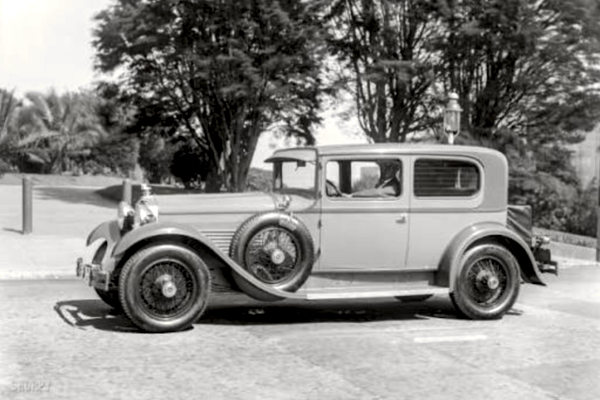
Engine: V8
Horsepower: 92
Price: $2,995 - $3,795
Vibe: Cutting-edge, safe
Overview: Introduced right in 1926, the "Safety Stutz" was heavily marketed as the most secure car in the world. It is the first American automobile to feature wire-reinforced shatterproof safety glass, four-wheel hydraulic brakes (which stop infinitely faster than older mechanical cable brakes), and an "underslung" chassis that gives it a dangerously low center of gravity that made it nearly impossible to flip during a high-speed chase. It is the ultimate tactical vehicle for drivers anticipating a shootout or a high-speed cornering chase.
Performance: The advanced overhead-cam 287 cubic inch straight-eight pushes out an impressive 92 horsepower. Its low-slung design allows it to take tight city corners at speeds that would flip a Cadillac or a Packard.
The Franklin Series 11
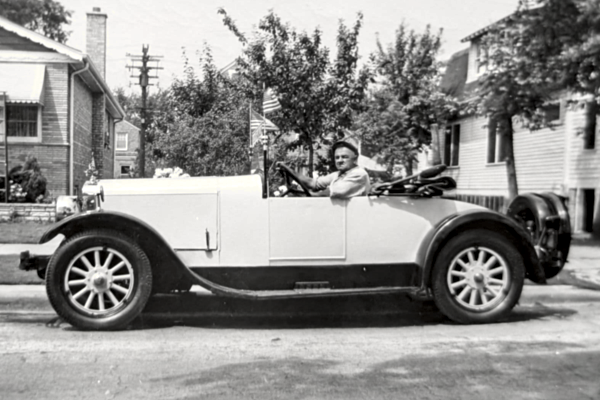
Engine: Air-Cooled Inline-6
Horsepower: 32
Price: $2,400 - $3,200
Vibe: Intellectual, eccentric, technologically advanced
Overview: The Franklin was unique because it was air-cooled (no radiator to freeze or leak) and featured a wooden frame (ash wood) which made it much lighter and more flexible than steel-framed cars. Because it was air-cooled, it could be pushed hard for long periods without overheating, perfect for a long stakeout or a cross-county pursuit. Known as the "Scientific Light Car", it was a favorite of aviator Charles Lindbergh.
Performance: Though it only produces 32 horsepower, its lightweight construction gives it a surprising power-to-weight ratio. It can idle for hours on a hot summer stakeout without overheating, a feat no other car on this list can match.
Buick Master Six
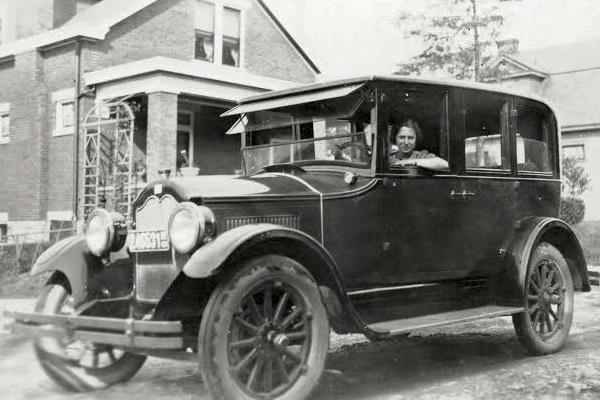
Engine: Inline-6
Horsepower: 75
Price: $1,250 - $1,925
Vibe: Strong, loud, reliable for rough work
Overview: The Buick Master Six is for the "workhorse" of the organization. In the mid-1920s, Buicks were known as the "Doctor’s Car". They were sturdy, dependable, and faster than a Ford, but not so expensive as to be precious. The Buick Master Six represents the sweet spot between value and heavy-duty power. It features General Motors’ highly reliable overhead-valve straight-six engine. The body had a heavy "masculine" look compared to the delicate lines of the Packard.
Performance: It actually had more raw power than the more prestigious Packard Six, making it a superior choice for a heavy-duty getaway car. It can handle being driven hard on backroads to avoid a police blockade, and its overhead-valve engine was famous for its durability under pressure. Its enlarged 274 cubic inch engine produces 75 horsepower. It is remarkably quick off the line and can confidently maintain a high-speed pursuit on or off paved roads.
Packard Six (Series 326/333)
Engine: Inline-6
Horsepower: 60
Price: $2,580 - $2,935
Vibe: Understated, high-end elegance, a bit underpowered for chases
Overview: The Packard was the quintessential "respectable" luxury car. The Packard Six serves as the "Junior" model to the grand Packard Eight, offering the exact same world-class engineering and build quality in a slightly smaller, more manageable package. It is celebrated for its near-silent operation and incredibly smooth clutch. For a detective family, it functions perfectly as a dignified daily driver that grants access to high-society events while remaining quiet enough to tail a suspect at night without a sound.
Performance: The 289 cubic inch inline-six produces a smooth 60 horsepower. It can cruise effortlessly at 60 mph, though it lacks the raw acceleration required to catch high-powered V8 bootlegger cars.
Packard Eight (Series 236/243)
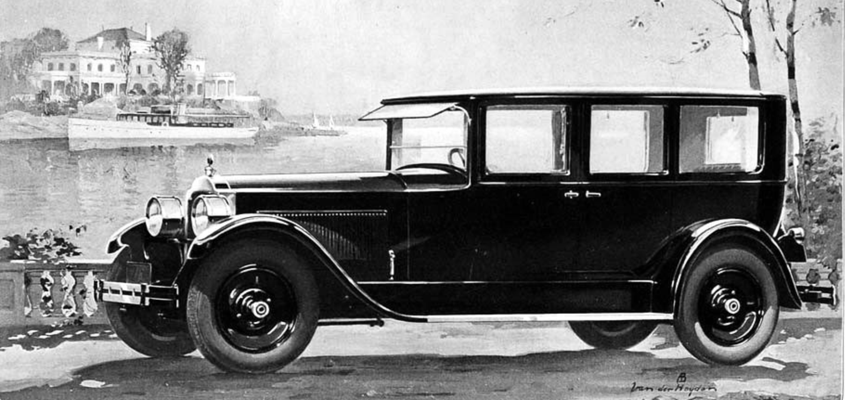
Engine: Inline-8
Horsepower: 85
Price: $3,600 - 5,000
Vibe: Fast, dead silent, incredibly prestigious
Overview: Packard eventually perfected the Straight-Eight engine. It was designed to be the smoothest engine in the world. Vibration was almost non-existent because of a nine-main-bearing crankshaft that balanced the firing of the cylinders. Unlike many other cars that chattered and roared, the Packard Eight was famously silent. You could idle the engine, and a pedestrian a few feet away might not even realize it was running. For a detective family, this is the ultimate "stealth" luxury car.
Performance: It produced 85 horsepower (compared to the Six’s 60 hp). It could comfortably reach 80 mph, which was blazing fast for 1926.
Cadillac Type V-63 (and Series 314)
Engine: V8
Horsepower: 80 - 87
Price: $2,995 - $4,485
Vibe: Domineering, wealthy, and politically powerful
Overview: Cadillac was General Motors’ absolute flagship brand, and the V-63 (transitioning into the Series 314 by 1926) was built to dominate. It pioneered the inherently balanced, inherent-vibration-free inherent design cross-plane V8 engine. These cars are massive, imposing, and instantly command respect. They are typically owned by mayors, judges, high-ranking police commissioners, and the wealthiest elite bosses of the city syndicate.
Performance: The heavy 314 cubic inch V8 produces up to 87 horsepower. It behaves like a luxury tank on the road—unbelievably smooth, highly powerful on straightaways, but heavy and difficult to maneuver through narrow city alleys.
Packard Twin Six (3rd Series)
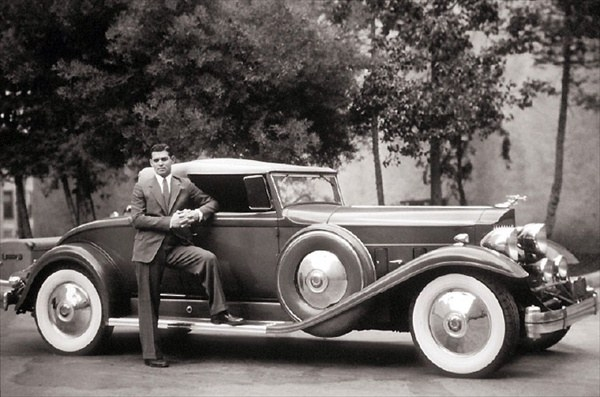
Engine: V12
Horsepower: 90
Price: $3,850 - $5,350 (Original MSRP prior to discontinuation)
Vibe: Legendary, intimidating
Overview: Though Packard officially replaced this flagship model with the Straight-Eight in 1923, the Twin Six remained a terrifyingly respected legend on the roads in 1926. As the world’s first mass-produced V12 engine, its block was a masterpiece of smooth, low-end torque. By 1926, it was the ultimate "Vintage Beast." It signals a driver who values raw, locomotive-like power over the slim, modern aesthetic of mid-twenties styling. Because it was a V12, it had a distinct, low-frequency hum. It felt like a locomotive, heavy, thirsty for gas, and intimidating.
Performance: The massive 424 cubic inch V12 churns out 90 horsepower with enough torque to pull a heavy steel sedan from a dead crawl to 70 mph without ever leaving top gear. While it can easily match a Lincoln for straight-line speed, its lack of modern four-wheel brakes means trying to stop this heavy monster in a sudden ambush is a hair-raising gamble.
Rolls-Royce (New Phantom / Phantom I)
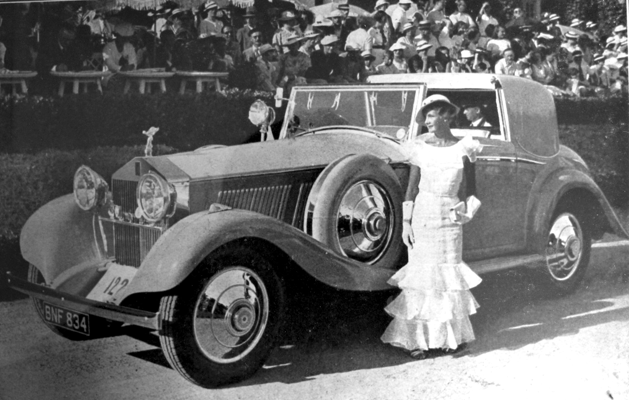
Engine: Inline-6
Horsepower: 100
Price: $12,000 – $18,000 (w/ full coachwork by a company like Brewster & Co.)
Vibe: Absolute, untouchable power
Overview: The "New Phantom" (retrospectively called the Phantom I) was the pinnacle of global luxury. These were often custom-bodied by coachbuilders like Barker or Brewster. A Rolls-Royce would stand out like a tank made of silver. It would likely be owned by presidents, queens, and kingpins who wants to signal they're above the law. Because Rolls-Royce sold only the chassis and engine, the body could be custom-armored more easily than mass-produced cars. However, its sheer size made it a poor choice for a narrow-alleyway shootout; it’s a car for the "victory parade" through the South Side. While the Packard V12 was about raw, smooth power, the Rolls-Royce was about absurd perfection. Every part was hand-fitted. If a Packard broke down, you took it to a mechanic; if a Rolls broke down, the company practically sent an engineer from the factory to apologize.
Performance: It featured a massive 7.7-liter (468 ci) engine producing roughly 100 horsepower. While it was heavy, it could reach speeds near 90–100 mph—unheard of for most cars of the era.
Over the Years
At the beginning of the 1920s, most automobiles still resembled horse carriages, with tall narrow bodies, exposed mechanical parts, wooden wheels, and open passenger compartments protected only by folding canvas tops. By the end of the decade, cars had become lower, longer, faster, and more refined. Closed steel bodies grew increasingly common, inspired by the smooth bodies of airplanes in the spirit of the age. Balloon tires, brighter electric headlights, safer brakes, and more reliable engines made driving easier.
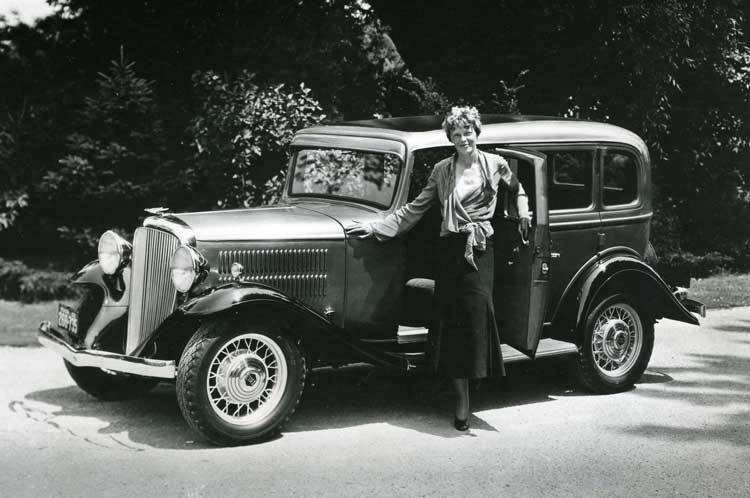
Streamlined styling had not yet fully arrived, but designers were already smoothing away some of the boxy carriage-era features. As automobiles improved and ownership exploded, horses rapidly vanished from city streets, surviving mainly on farms and in ceremonial use by the end of the decade, while paved highways, gasoline stations, and roadside garages reshaped the American landscape around the needs of the motorcar.